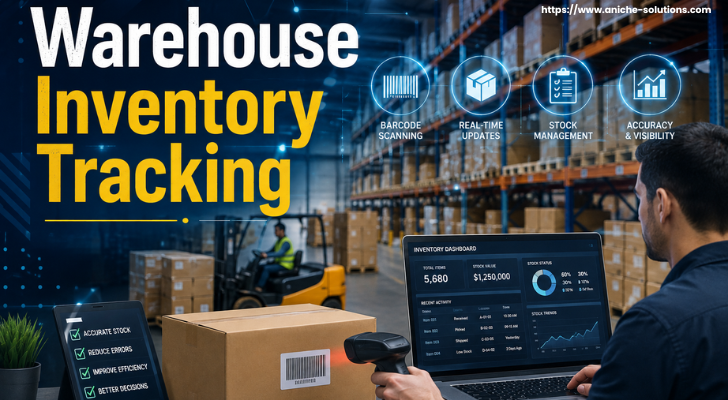
Warehouses play an important role in supply chain operations. They help businesses store products, manage inventory, and send orders to customers on time. The way a warehouse operates can affect speed, accuracy, and overall efficiency.
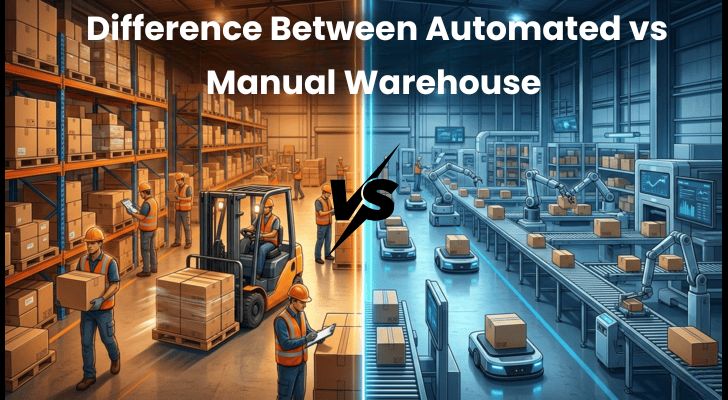
Many businesses today operate warehouses in two main ways: manual warehousing and automated warehousing. A manual warehouse depends on human effort to handle tasks like picking, packing, sorting, and moving goods. An automated warehouse uses machines, robots, and warehouse systems to complete many of these tasks.
This blog will explain the difference between automated vs manual warehouse systems and helps businesses choose the right method for their operations.
Automated warehousing refers to a warehouse system where technology and machines handle many operational tasks. Instead of relying only on human workers, the warehouse uses automated equipment and software to manage inventory, move goods, and process orders.
In an automated warehouse, systems such as robots, conveyor belts, automated storage and retrieval systems (AS/RS), and warehouse management software work together to complete tasks. These technologies help move products quickly, store items in the correct location, and reduce manual effort.
Automated warehousing improves accuracy and speed in warehouse operations. Many large businesses use automated warehouse systems to handle high order volumes, manage large inventories, and reduce operational delays.
Manual warehousing refers to a traditional warehouse system where most tasks are completed by human workers. Employees handle activities such as receiving goods, storing products, picking orders, packing items, and loading shipments.
Workers usually use basic equipment like forklifts, pallet jacks, shelves, and barcode scanners to manage inventory. In many manual warehouses, records are maintained through simple software or spreadsheets while physical movement of goods depends on labor.
Manual warehouse systems work well for small or medium businesses with lower order volumes. This method requires less technology investment, though it may take more time and effort to complete daily warehouse operations.
Both automated warehouses and manual warehouses support storage and order processing.The following points explain the main automated vs manual warehouse differences.
The work process in an automated warehouse depends on technology and integrated systems. Machines such as automated storage and retrieval systems, conveyor belts, and warehouse robots help move products from one location to another. The warehouse management software tracks product locations and controls many operational activities. These systems reduce the need for manual handling and help organize goods in a structured way.
A manual warehouse follows a traditional working method. Workers receive products, store them on racks or shelves, and pick them when orders arrive. Movement of goods takes place with the help of forklifts, pallet jacks, or hand carts. Most tasks require human effort, and employees play a major role in maintaining warehouse operations.
Automated warehouses process tasks much faster because machines can operate continuously without breaks. Automated systems pick, sort, and move products in a short time. This helps warehouses handle large numbers of orders every day. Many e-commerce companies and large retailers use automation to maintain fast order processing and delivery speed.
Manual warehouses depend on worker efficiency and physical effort. Order processing takes more time since each activity requires manual work. During busy seasons or high demand periods, manual systems may struggle to keep up with order volumes.
Inventory accuracy improves in an automated warehouse because systems track products using software and digital records. Automated scanning and tracking systems record stock movement in real time. This reduces mistakes related to incorrect inventory counts or misplaced products.
Manual warehouses may experience errors during picking, packing, or stock counting. Workers sometimes place items in the wrong location or record incorrect quantities. These mistakes can affect order fulfillment and inventory records.
Automated warehouses reduce dependency on large workforces. Machines perform repetitive tasks such as product movement, sorting, and storage. Employees mainly supervise the systems, maintain equipment, and manage warehouse operations.
Manual warehouses require a larger workforce because workers complete most tasks themselves. Staff members handle receiving goods, organizing products, picking orders, packing shipments, and loading trucks. Labor requirements increase as warehouse activity grows.
Automated warehouse systems require a higher initial investment. Businesses need to invest in automation equipment, warehouse software, and system installation. The setup cost can be significant for small businesses.
Manual warehouses involve lower technology investment. Companies mainly spend money on labor, storage racks, forklifts, and basic warehouse tools. Many small or medium businesses prefer this setup during the early stage of their operations.
Automation makes it easier for warehouses to manage growing business demand. Automated systems can process more orders without large increases in manpower. Businesses with high order volumes often rely on automated warehouses to support expansion.
Manual warehouses face limitations when order volumes grow rapidly. Companies may need to hire more workers, increase warehouse space, or add extra shifts to manage the workload. This can make operations more complex over time.
The main difference lies in the level of technology used in warehouse operations. The table below explains the differences between the two.

Upgrading from manual to automated warehousing does not always require a complete system change at once. Companies can move step by step and introduce technology based on their operational needs and budget. The following steps explain how businesses can shift from a manual warehouse to an automated warehouse.
The first step is to review how the current warehouse operates. Businesses should examine areas such as order processing time, inventory accuracy, storage space usage, and labor productivity. This helps identify which processes cause delays or errors.
A clear understanding of existing challenges makes it easier to decide where automation will provide the most value. For example, some warehouses face delays in picking orders, while others struggle with inventory tracking.
A warehouse management system (WMS) is often the first step toward automation. This software helps track inventory, manage product locations, and monitor warehouse activities. It provides better visibility of stock levels and order movement.
A WMS reduces manual record keeping and improves inventory control. Businesses can manage orders more efficiently and maintain accurate data across warehouse operations.
Barcode scanning or RFID systems help track inventory movement in real time. These technologies make it easier to record product details during receiving, storing, picking, and shipping.
Barcode scanners reduce manual data entry and improve accuracy. Warehouse staff can locate products quickly and update stock information without errors.
After basic systems are in place, businesses can add automated equipment to support warehouse activities. Conveyor belts, automated storage systems, and robotic picking tools help move goods efficiently inside the warehouse.
These systems reduce manual product movement and improve the speed of warehouse operations.
Warehouse staff must understand how to operate new systems and equipment. Training helps employees learn how to use warehouse software, scanning devices, and automated machines.
Well-trained employees ensure smooth operations and help businesses gain the full benefit of warehouse automation.
Automation does not require immediate full transformation. Businesses can introduce automation in phases depending on their growth and operational requirements.
A gradual upgrade approach allows companies to control costs and test new systems before expanding automation across the entire warehouse.
A manual warehouse can be the right option for businesses with smaller operations and lower order volumes. When daily warehouse activities remain manageable, workers can easily handle tasks such as storing products, picking orders, and packing shipments. In such cases, manual processes keep operations simple and cost-effective.
Budget also plays an important role when choosing between automated vs manual warehouse systems. Automation requires investment in machines, software, and infrastructure. Many small or growing businesses prefer manual warehousing because it allows them to operate with basic equipment such as racks, forklifts, and pallet jacks without heavy technology spending.
Manual warehousing also works well when products require flexible handling. Warehouses that manage items with different sizes, shapes, or special storage needs often depend on human workers for careful handling. For businesses in the early stage of growth, a manual warehouse provides enough support until operations expand and automation becomes necessary.
Warehouse automation becomes important when business operations grow and manual processes start creating delays. As order volumes increase, workers may find it difficult to handle picking, packing, and inventory management within the required time. An automated warehouse helps manage these activities faster and with better accuracy.
Large warehouses that handle thousands of products often need automation to maintain smooth operations. Automated systems help track inventory, organize storage, and move goods quickly inside the warehouse. This improves order processing speed and reduces mistakes that may occur during manual handling.
Automation also becomes necessary when businesses want to scale their operations. As companies expand their market and customer base, warehouse demand increases. Automated warehouse systems help manage higher order volumes without relying completely on a large workforce.
The choice between an automated vs manual warehouse depends on several business factors. Every company has different operational needs, order volumes, and budgets. A clear understanding of these factors helps businesses select the warehouse system that fits their operations.
Business size and daily order volume play a major role in this decision. Small businesses with limited inventory and fewer orders may operate efficiently with a manual warehouse. Larger companies that process high volumes of orders often benefit from automated systems that support faster operations and better inventory control.
Budget and long-term business plans should also be considered. Automation requires a higher investment at the beginning, though it can support business growth and operational efficiency in the long run. Companies should evaluate their current warehouse challenges and future expansion plans before selecting the right warehousing approach.
Yes, though many small businesses start with manual systems and adopt automation as operations grow.
Automation reduces manual work, though workers still manage systems and supervise operations.
Manual warehouses cost less at the beginning, while automated warehouses may reduce operational costs over time.
Yes, businesses can upgrade a manual warehouse step by step by adding systems like WMS, barcode scanning, and automated equipment.
Large warehouses handle high order volumes. Automation helps process orders faster, improve accuracy, and manage inventory more efficiently.
Both automated and manual warehouse systems play an important role in supply chain operations. A manual warehouse works well for small businesses or operations with limited order volumes. This approach requires less investment and relies mainly on human effort to manage daily tasks.
An automated warehouse uses technology and systems to handle warehouse activities with better speed and accuracy. Large businesses often choose automation to manage high order volumes and maintain efficient operations.
The right choice between automated vs manual warehouse systems depends on business size, budget, and operational needs. A clear understanding of warehouse requirements helps companies select the system that supports their growth and long-term goals.
At A' Niche Solutions, we transform inventory management into a smart, automated, and future-ready process.
Quick Links
Products
Business Solutions
Gallery
Copyright 2025, A'Niche Infotech Solutions Pvt Ltd. All Right Reserved
Managed By