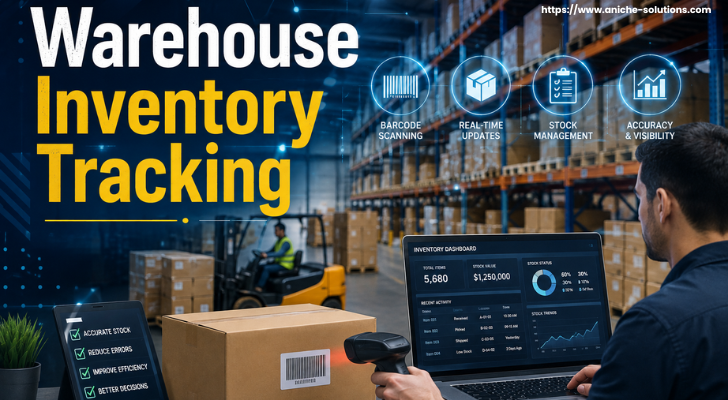

Every business that deals with physical products needs to know how much stock it has at any given time. Incorrect inventory records can lead to stock shortages, excess inventory, delayed deliveries, and unhappy customers. This is why businesses regularly check their inventory and compare it with their recorded stock data.
Stock taking is the process of physically counting inventory to verify whether the actual stock matches the quantity recorded in the system. It helps businesses identify missing items, damaged products, data entry mistakes, and other inventory-related issues.
From retail stores and warehouses to manufacturing units and distribution centers, stock taking plays an important role in inventory management. Regular stock checks help businesses maintain accurate inventory records, improve operational efficiency, and make better purchasing decisions.
In this blog, we will understand what stock taking is, how the stock taking process works, its benefits, different methods, common challenges, and how businesses can simplify stock counting with a digital stock taking solution.
Stock taking is the process of physically counting inventory and checking whether the actual stock matches the quantity recorded in the inventory system. Businesses use it to verify the availability of products, raw materials, work-in-progress items, and finished goods.
The purpose of stock taking is to maintain accurate inventory records. During the counting process, businesses may find missing items, damaged products, misplaced stock, or differences caused by manual errors. Identifying these issues helps keep inventory data reliable and up to date.
Stock taking is an important part of inventory management because it helps businesses make better purchasing, production, and sales decisions. Regular stock checks also reduce the chances of stock shortages, excess inventory, and operational disruptions.
Accurate inventory records are essential for smooth business operations. Stock taking helps businesses verify whether the stock available in the warehouse, store, or distribution center matches the inventory data recorded in the system. This reduces the chances of errors that can affect daily operations.
Stock taking also helps identify issues such as missing items, damaged products, incorrect stock entries, and inventory losses. When businesses know the exact quantity of stock available, they can avoid stockouts, reduce excess inventory, and improve order fulfillment.
Regular stock checks support better inventory management and decision-making. Accurate stock data helps businesses plan purchases, manage warehouse space efficiently, and maintain the right inventory levels to meet customer demand.
Stock taking follows a structured process to ensure inventory records accurately match the physical stock available in the warehouse or store. While the exact approach may vary from one business to another, the following steps are commonly followed.
Every stock taking process begins with proper planning. Businesses decide when the stock count will take place and determine which locations, products, or inventory categories will be included. Many organizations schedule stock taking during non-working hours or periods of low activity to reduce disruptions to daily operations.
The team responsible for counting inventory is assigned specific tasks, and the required tools such as barcode scanners, mobile devices, or stock count sheets are prepared in advance.
Before the actual count begins, inventory should be arranged properly. Products are grouped according to their categories, storage locations, or SKU numbers. Damaged, returned, or obsolete items are usually separated from regular inventory. A well-organized warehouse makes counting easier and reduces the chances of missing products or counting the same item twice.
The next step involves physically counting every item included in the stock taking process. Staff members verify the quantity available on shelves, racks, bins, or storage areas and record the results.
Many businesses use barcode-based stock taking systems to speed up the counting process and improve accuracy. Digital counting methods also reduce manual paperwork and data entry errors.
Once the counting is completed, the recorded quantities are compared with the inventory data stored in the inventory management system. This comparison helps identify any differences between actual stock and system records. The goal of this step is to verify whether inventory information is accurate and determine where discrepancies exist.
Differences between physical stock and recorded stock are known as stock variances. Businesses investigate these variances to understand their causes. Common reasons include receiving errors, dispatch mistakes, damaged products, theft, misplaced inventory, or incorrect data entry. Finding the root cause helps prevent similar issues in the future.
After all discrepancies have been reviewed and verified, the inventory records are updated to reflect the actual stock available. Accurate records are important because purchasing, production planning, and order fulfillment decisions depend on reliable inventory data. This step ensures that the inventory management system reflects the current stock position of the business.
The final step is to prepare stock taking reports. These reports provide details about inventory levels, stock variances, adjustments made, and overall inventory accuracy.
Management teams use these reports to identify recurring inventory issues, improve stock control processes, and make better inventory management decisions in the future.
Regular stock taking offers several benefits for businesses that manage inventory. It helps maintain accurate stock records, improves inventory control, and supports better business decisions.
Stock taking helps businesses verify whether the actual inventory matches the data recorded in the system. Accurate stock records reduce confusion and help teams work with reliable inventory information.
Regular stock checks help identify missing, damaged, expired, or misplaced items. Early identification of these issues allows businesses to take corrective action and reduce inventory losses.
Stock taking gives businesses a clear view of available inventory. This helps maintain the right stock levels and prevents situations where products are either overstocked or out of stock.
Accurate inventory data helps purchasing teams understand which products need replenishment and which items are moving slowly. This supports smarter purchasing decisions and reduces unnecessary inventory investment.
Customers expect products to be available when they place orders. Stock taking helps businesses maintain accurate inventory levels, which improves order fulfillment and reduces delays caused by stock inaccuracies.
When inventory records are accurate, warehouse operations become more efficient. Employees spend less time searching for products, correcting errors, or resolving inventory-related issues, which improves overall productivity.

Businesses use different stock taking methods depending on their inventory volume, operational requirements, and level of inventory control. Choosing the right method helps maintain accurate stock records while minimizing disruptions to daily operations.
Annual stock taking is performed once a year, usually at the end of a financial year. During this process, businesses count their entire inventory and compare it with the records available in the inventory system.
Many organizations temporarily stop warehouse or store operations while the count is being conducted. This method helps verify inventory accuracy for financial reporting and auditing purposes, but it can be time-consuming for businesses with large inventories.
Periodic stock taking is carried out at fixed intervals, such as monthly, quarterly, or half-yearly. Instead of waiting until the end of the year, businesses perform inventory checks throughout the year to maintain better inventory accuracy.
This method helps identify discrepancies earlier and reduces the chances of large inventory differences accumulating over time.
Cycle counting is a continuous inventory counting method where a small portion of inventory is counted regularly. Rather than counting all stock at once, businesses count selected products, locations, or categories on a daily, weekly, or monthly basis.
Many warehouses prefer cycle counting because it improves inventory accuracy without interrupting normal operations. It also helps identify inventory issues quickly and allows corrective actions to be taken immediately.
Continuous stock taking involves checking inventory throughout the year as part of daily warehouse activities. Inventory records are updated regularly, and physical verification is conducted on an ongoing basis.
Businesses that use barcode systems, RFID technology, or inventory management software often follow this method because it provides real-time visibility into stock levels and reduces the need for large-scale stock counts.
Spot checking focuses on specific products, storage locations, or inventory categories rather than the entire inventory. Businesses usually perform spot checks when they suspect discrepancies or want to verify the accuracy of particular stock records.
This method is quick, requires fewer resources, and helps identify inventory issues before they become larger problems. Many organizations use spot checking alongside other stock taking methods for better inventory control.
Although stocktaking is important for maintaining accurate inventory records, businesses often face several challenges during the process. These challenges can affect counting accuracy, consume valuable time, and increase operational costs.
Stock taking can take a significant amount of time, especially for businesses that manage large inventories across multiple locations. Counting thousands of items manually requires considerable effort and may slow down regular warehouse operations.
Manual stock counting increases the risk of mistakes such as incorrect quantities, duplicate counts, missed items, or data entry errors. Even small errors can create discrepancies between physical stock and inventory records.
Many businesses temporarily pause receiving, picking, packing, or shipping activities while stock taking is in progress. This can affect productivity and delay order processing if the counting process takes longer than expected.
Warehouses that store a wide variety of products often find it challenging to count and verify every item accurately. The complexity increases when inventory is spread across multiple warehouses, racks, or storage locations.
Achieving high inventory accuracy can be difficult when businesses depend on paper-based processes or spreadsheets. Without barcode scanning or automated inventory tracking systems, the chances of errors and mismatched records become much higher.
A’Niche Solutions helps businesses simplify stock taking through a barcode-based inventory tracking system. Instead of relying on manual counting and paperwork, warehouse staff can use barcode scanners or mobile devices to record inventory quickly and accurately. This reduces counting errors and saves valuable time during stock audits.
The solution provides real-time inventory visibility, allowing businesses to compare physical stock with system records more efficiently. It helps identify inventory discrepancies, maintain accurate stock data, and improve inventory control across warehouses and storage locations.
With accurate inventory information, businesses can reduce stock shortages, avoid excess inventory, and improve overall warehouse operations. Aniche Solutions also generates detailed stock taking reports that help management monitor inventory accuracy and make better inventory-related decisions.
Stock taking is usually performed by warehouse staff, inventory managers, store managers, or dedicated audit teams. In some organizations, external auditors may also participate during annual stock verification.
Yes. Businesses can use methods such as cycle counting or barcode-based stock taking to count inventory without completely stopping daily warehouse activities.
Businesses use barcode scanners, mobile devices, RFID technology, inventory management software, and stock count sheets to perform stock taking efficiently and accurately.
Yes. Even small businesses need accurate inventory records to avoid stock shortages, prevent overstocking, and maintain better control over their inventory.
Barcode scanning reduces manual data entry, speeds up stock verification, and minimizes counting mistakes, helping businesses maintain more accurate inventory records.
Stock taking is an essential part of inventory management that helps businesses maintain accurate stock records and improve inventory control. Regular stock checks help identify discrepancies, reduce inventory losses, and ensure that inventory data remains reliable.
Businesses can use different stock taking methods based on their operational needs, but the main goal remains the same knowing exactly what inventory is available at any given time. Accurate stock information supports better purchasing, warehouse management, customer service, and improves the effectiveness of an inventory management system.
By using a digital stock taking solution such as Aniche Solutions, businesses can reduce manual effort, improve counting accuracy, and gain better visibility into their inventory. This helps create a more efficient and well-controlled inventory management process.

At A' Niche Solutions, we transform inventory management into a smart, automated, and future-ready process.
Quick Links
Products
Business Solutions
Gallery
Copyright 2025, A'Niche Infotech Solutions Pvt Ltd. All Right Reserved
Managed By