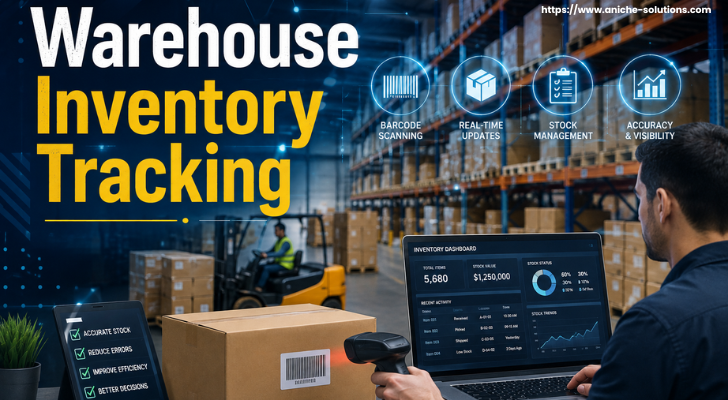
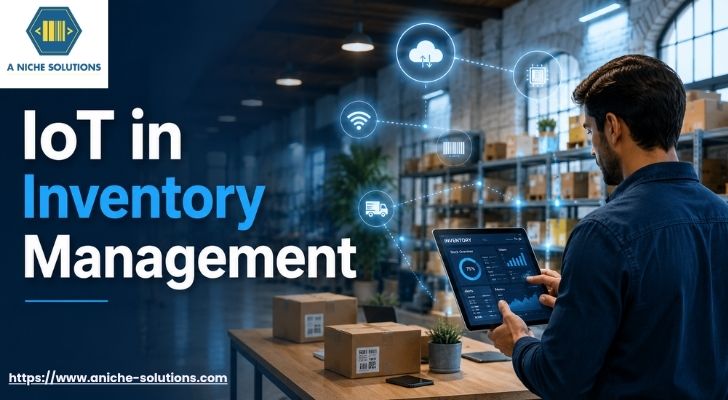
Inventory management is an important part of every business that handles products, raw materials, or stock. Many companies still face problems like wrong stock counts, missing items, delayed updates, and manual errors. These issues can affect daily operations and customer satisfaction.
This is where IoT in inventory management helps businesses work in a smarter and faster way. IoT devices can track products, monitor stock movement, and send real-time updates without manual checking. Businesses can know what is available, what is running low, and where items are stored.
Inventory management in IoT also helps warehouses and stores reduce stock wastage and avoid overstocking. Companies can make better decisions with accurate inventory data. IoT systems work with sensors, RFID tags, scanners, and cloud platforms to improve inventory visibility.
In this guide, we will understand how IoT and inventory management work together, their benefits, working process, challenges, and how businesses can use IoT services for better inventory operations.
IoT stands for Internet of Things. It is a technology where devices and systems connect through the internet and share data automatically. These devices can collect, send, and receive information in real time.
In inventory management, IoT helps businesses track stock, products, and warehouse activities with better accuracy. Companies use sensors, RFID tags, barcode scanners, GPS trackers, and smart devices to monitor inventory movement.
IoT in inventory management gives real-time updates about stock quantity, product location, and inventory status. Staff can quickly know which products are available, which items are running low, and which stock needs restocking.
Inventory management in IoT also reduces manual work and helps businesses avoid stock-related mistakes. This makes inventory operations faster and more organized.
IoT plays an important role in modern inventory operations. Businesses need accurate stock information to manage orders, storage, and product movement properly. Manual inventory tracking often takes more time and can lead to mistakes.
IoT in inventory management helps businesses track inventory in real time. Companies can check stock levels, product locations, and warehouse activities without manual counting. This improves inventory accuracy and reduces delays.
The use of IoT in inventory management also helps businesses avoid overstocking and stock shortages. Real-time alerts help teams refill inventory at the right time. This keeps operations smooth and improves customer service.
Inventory management in IoT also improves visibility across warehouses and supply chains. Managers can make faster decisions with updated inventory data and better stock control.
IoT technology helps businesses manage inventory with better accuracy, speed, and visibility. Companies can track stock in real time, reduce manual work, and improve warehouse operations. Below are some major benefits of using IoT in inventory management.
IoT devices help businesses monitor inventory in real time. RFID tags, sensors, and barcode scanners continuously update inventory data in the system. Teams can quickly check stock availability, product movement, and storage location without manual counting.
Real-time tracking helps businesses avoid delays and improves inventory accuracy. Managers can make faster decisions because they always have updated stock information.
Inventory management in IoT helps companies maintain proper stock levels. Businesses can easily identify fast-moving, slow-moving, and low-stock products. Automated alerts notify teams when inventory levels go below the required limit.
This helps businesses avoid overstocking and stock shortages. Proper stock control also improves warehouse space management and reduces unnecessary inventory costs.
Manual inventory processes often create problems like incorrect stock entries, missing items, and duplicate records. IoT in inventory management automates many inventory tasks and reduces dependency on manual updates.
Automated tracking improves data accuracy and minimizes human mistakes. Staff can focus more on operations instead of spending hours on stock checking and paperwork.
IoT systems improve the speed of warehouse activities. Workers can quickly locate products using RFID technology and smart tracking systems. This reduces time spent searching for inventory inside warehouses.
Faster inventory checking, picking, packing, and shipping help businesses complete orders quickly. Better warehouse efficiency also improves customer satisfaction and daily productivity.
The use of IoT in inventory management gives businesses complete visibility of inventory across warehouses and supply chains. Managers can monitor inventory status, product movement, and stock conditions from a single platform.
Better visibility helps businesses plan inventory more effectively and respond quickly to supply chain changes. It also improves coordination between warehouses, suppliers, and logistics teams.
IoT and RFID-based inventory management systems track products and update inventory data automatically. These systems help businesses manage stock in real time with better accuracy and less manual work.
Businesses place RFID tags on products, boxes, or pallets. Each tag stores product information like item code, quantity, and product details.
RFID readers scan the tags when products move inside the warehouse. Inventory data gets updated automatically without manual checking.
IoT devices and sensors transfer inventory information through the internet. Managers can monitor stock movement and inventory status in real time.
The collected inventory data is stored in cloud-based inventory management software. Businesses can access stock details from different devices anytime.
The system sends alerts for low stock levels and unusual inventory activity. Businesses can also generate reports for better inventory planning.
IoT and RFID technology improve inventory accuracy and reduce manual work. Warehouse operations become faster and more organized.
IoT technology improves inventory operations, but businesses can still face some challenges during implementation and daily use. Proper planning and system management are important for smooth inventory operations.
IoT inventory systems require devices like RFID tags, sensors, scanners, and software platforms. The initial setup cost can be high for small and medium-sized businesses.
IoT systems collect and transfer large amounts of inventory data through internet-connected devices. Weak security systems can increase the risk of data breaches and unauthorized access.
IoT devices depend on stable internet connections for real-time data updates. Poor network connectivity can affect inventory tracking and delay system updates.
Many businesses already use existing inventory or warehouse management software. Connecting IoT systems with old software can sometimes create compatibility issues.
IoT devices and RFID equipment require regular maintenance for smooth performance. Damaged sensors or faulty devices can affect inventory accuracy and tracking operations.
Employees need proper training to use IoT inventory systems correctly. Lack of technical knowledge can slow down operations and create system handling issues.
A’Niche Solutions provides reliable IoT services for businesses that want better inventory management and warehouse operations. The company focuses on practical and easy-to-manage solutions that help businesses improve inventory tracking, stock visibility, and operational efficiency.
The team offers IoT solutions for industries like logistics, retail, warehousing, manufacturing, and supply chain management. Businesses can use RFID technology, IoT devices, and smart inventory systems to track inventory in real time and reduce manual errors in daily operations.
Aniche Solutions also helps businesses connect IoT systems with their existing inventory management software. This makes system management easier and supports smooth inventory operations without major changes in workflow.
The company provides scalable IoT solutions that can grow with business requirements. Businesses can upgrade their systems as inventory operations expand. Technical support and implementation assistance are also provided to help companies manage IoT systems properly.
Businesses commonly use RFID tags, barcode scanners, sensors, GPS trackers, and IoT-enabled devices in inventory management systems.
Yes, small businesses can use IoT inventory systems based on their operational needs and budget requirements.
RFID technology plays an important role in inventory management in IoT because it helps businesses track products automatically and improve inventory accuracy.
IoT helps businesses reduce inventory losses, manual work, and unnecessary stock purchases. Real-time tracking also helps improve warehouse efficiency and inventory planning.
Industries like retail, logistics, manufacturing, healthcare, eCommerce, and warehousing commonly use IoT inventory management systems for better stock tracking and inventory control.
IoT technology is changing the way businesses manage inventory and warehouse operations. Real-time tracking, automated inventory updates, and better stock visibility help companies improve inventory accuracy and daily efficiency.
The use of IoT in inventory management helps businesses reduce manual errors, control stock levels, and speed up warehouse processes. Technologies like RFID, sensors, and smart tracking systems make inventory operations more organized and reliable.
Businesses that want better inventory control and faster operations can benefit from IoT-based inventory management systems. With the right technology partner, companies can build smarter and more efficient inventory processes for long-term growth.

At A' Niche Solutions, we transform inventory management into a smart, automated, and future-ready process.
Quick Links
Products
Business Solutions
Gallery
Copyright 2025, A'Niche Infotech Solutions Pvt Ltd. All Right Reserved
Managed By