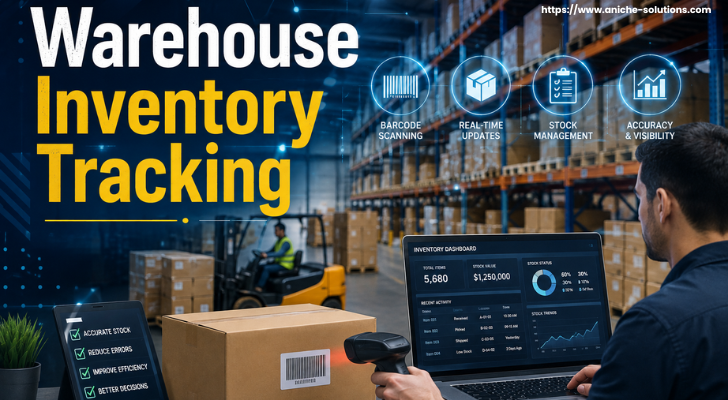

Inventory plays a direct role in how smoothly a business runs. Too much stock blocks money, and too little stock leads to missed sales. Many businesses still manage inventory using manual methods, which often causes errors, delays, and confusion in daily operations.
This is where an inventory management system becomes useful. A proper system helps businesses track stock levels, control movement of goods, and plan purchases better. Today, companies look for the best inventory management system to reduce losses and maintain accurate records.
In this blog, we will explain what an inventory management system is, its types, how it works, benefits, challenges, and the latest trends to help businesses manage their inventory effectively and make informed decisions.
An inventory management system is a software or tool that helps businesses record, track, and manage their stock. It shows how much inventory is available, where it is stored, and when new stock is needed. This system replaces manual registers and spreadsheets, which often cause mistakes.
To understand an inventory management system, think of it as a central place where all inventory data stays updated in real time. It tracks raw materials, finished products, and goods in transit. This makes daily operations easier and more organised.
The best inventory management system also connects inventory data with sales, purchasing, and warehouses. This helps businesses avoid overstocking and stock shortages. With clear stock visibility, teams can make better decisions without confusion.
Inventory management systems come in many forms. Each type supports businesses based on inventory size, movement, and operational needs.
This system updates inventory automatically after every transaction. Stock levels change in real time when goods are sold, returned, or received. Businesses that deal with fast-moving products prefer this system. It reduces stock shortages and helps teams plan reorders on time.
The asset management system manages assets that are not meant for sale. It tracks items like machinery, office equipment, IT devices, and tools. The system records asset location, usage history, and maintenance details. Businesses use it to reduce asset loss and control operational costs.
Inventory updates happen at fixed intervals such as weekly, monthly, or quarterly. Physical stock counting is required to match records with actual inventory. This system suits businesses with slow inventory movement. It costs less than automated systems but offers limited visibility.
Each product carries a barcode that stores item information. Scanning the barcode updates inventory data instantly during stock movement.This system improves accuracy and reduces manual errors. Retail stores and warehouses widely use barcode systems to save time and improve tracking.
A warehouse management system manages inventory inside the warehouse. It controls storage locations, picking, packing, and order dispatch. This system improves warehouse efficiency and reduces order delays. Many businesses integrate WMS with the best inventory management system for complete stock visibility.
This system stores inventory data on cloud servers. Users can access inventory details from multiple locations using the internet. Businesses with multiple branches prefer cloud systems for centralised control. Automatic backups and real-time updates support better decision-making.
An inventory management system follows a structured flow to control stock from entry to delivery. Each step helps businesses keep inventory records accurate and updated.
The process starts by adding product details into the system. Information such as product name, SKU, category, unit price, and storage location is recorded. Proper setup helps the system track each item correctly from the beginning.
Stock details update when goods arrive from suppliers or production units. The system records received quantity, supplier name, and date of entry. This step ensures inventory levels match physical stock.
Items are stored in assigned warehouse locations like racks, bins, or shelves. The system records exact storage positions for quick access. This improves picking speed and reduces misplaced items.
Inventory levels change whenever products are sold, transferred, or returned. The system tracks all movements in real time. Order processing becomes faster due to clear stock availability.
The system monitors stock levels continuously. Alerts notify teams when inventory reaches minimum levels. This helps businesses place orders on time and avoid stock shortages.
Reports provide details on stock status, movement history, and slow-moving items. Businesses use these insights to plan purchases, control costs, and improve inventory decisions.
An inventory management system helps businesses control stock without confusion. It brings clarity, structure, and better control to daily inventory operations.
The system updates stock levels automatically after every sale or purchase. This helps businesses know the exact quantity available at any time. Accurate stock data reduces mistakes during order processing and billing.
Proper stock tracking prevents overstocking and unnecessary storage expenses. Businesses buy inventory only when needed. This supports better cash flow and avoids money blockage in unsold goods.
Clear inventory visibility helps teams process orders faster. Products are picked and dispatched without delays. Customers receive correct orders on time, which improves trust.
Inventory reports show sales trends and stock movement. Businesses use this information to plan purchases and manage demand. Clear data supports smarter business decisions.
An inventory management system helps businesses maintain proper control over stock. It shows real-time inventory status and reduces confusion during daily operations. Clear stock visibility supports smooth sales and purchase activities.
This system plays a key role in cost control. Businesses avoid excess buying and reduce storage waste. Proper inventory planning helps maintain steady cash flow and limits losses.
Inventory data supports better coordination between sales, purchase, and warehouse teams. Orders get processed on time due to accurate stock records. This leads to better customer satisfaction and stable business growth.
An inventory management system includes useful features that help businesses manage stock in a better way. These features support accuracy, control, and smooth daily operations.
This feature shows current stock levels at all times. Inventory updates after every sale, return, or purchase. Teams always work with correct stock data.
The system sends alerts when inventory reaches minimum levels. This helps businesses place orders on time. Stock shortages and emergency buying reduce significantly.
Products are organised by categories, SKUs, and locations. This makes searching and tracking items easier. Clear organisation improves inventory handling speed.
Barcodes and SKUs help identify products quickly. Scanning reduces manual entry and errors. This feature saves time during stock movement.
Reports show stock movement, sales trends, and slow-moving items. Businesses use these insights to control inventory costs. Data-driven planning becomes easier.
This feature allows businesses to manage stock across multiple warehouses or branches. Inventory stays visible from one system. Centralised control improves coordination.
Inventory management systems support stock control, but several challenges still affect daily operations. These problems often arise due to process gaps, system limits, or human errors.
Incorrect product details enter the system during manual updates or bulk uploads. Wrong quantities or pricing create mismatch between physical stock and system records. This leads to billing errors and order delays.
Poor demand planning results in excess inventory or frequent stockouts. Extra stock increases storage and handling costs. Low stock causes missed sales and customer dissatisfaction.
Some inventory systems do not sync properly with sales, accounting, or warehouse software. Inventory updates fail to reflect across departments. Teams then work with outdated stock data.
Complex workflows make the system difficult to use on a daily basis. Employees spend more time managing processes instead of completing tasks. Simple system design improves productivity.
Staff members struggle when proper training is not provided. Incorrect system usage leads to wrong inventory updates and reporting issues. Regular training improves confidence and accuracy.
Some systems fail to handle growing inventory volume. System performance slows as product count increases. Scalable solutions support business growth without disruptions.
Different industries use inventory management systems in their own way. Each industry focuses on specific inventory needs based on product type and supply flow.
Retail businesses manage a wide range of products with fast stock movement. Inventory systems track sales, returns, and restocking activities. Accurate stock data helps avoid empty shelves and excess inventory.
Manufacturers track raw materials, work-in-progress, and finished goods. Inventory systems help plan production schedules and manage material availability. Proper tracking reduces production delays.
Online sellers manage inventory across websites, marketplaces, and warehouses. Inventory systems update stock after every online order. This prevents overselling and order cancellations.
Hospitals and pharmacies manage medicines, medical tools, and supplies. Inventory systems track expiry dates and batch details. This supports patient safety and regulatory compliance.
Logistics companies manage goods in storage and transit. Inventory systems track inbound and outbound shipments. This improves warehouse efficiency and delivery timelines.
Inventory management is changing with the use of smarter technologies and automated systems. Businesses now focus on accurate demand planning and real-time stock control. Artificial intelligence supports better sales prediction and helps reduce overstock and shortages.
Automation is becoming common across inventory operations. Stock updates, order processing, and reporting happen with minimal manual effort. This reduces errors and saves time for inventory teams.
Cloud-based inventory systems allow businesses to manage stock from any location. Centralised data improves coordination between branches and warehouses. Integration with sales, finance, and logistics systems also supports smoother business operations and better inventory control.
Aniche Solution provides a structured inventory management system that helps businesses maintain accurate stock records. The system tracks inventory in real time and reduces manual stock updates. This helps teams work with correct inventory data at all times.
The solution supports smooth coordination between sales, purchase, and warehouse teams. Stock movement updates automatically after every transaction. Clear visibility helps avoid stock shortages and excess inventory.
Aniche Solution also offers detailed inventory reports for better planning. Businesses track fast-moving and slow-moving items easily. This supports cost control and improves daily inventory decisions.
Proper inventory management prevents stock shortages and overstocking. It reduces storage costs, improves cash flow, and ensures smooth order fulfilment.
Cloud systems allow inventory access from multiple locations. They provide centralised data, real-time updates, and support coordination across branches or warehouses.
Yes, features like barcode scanning, automated updates, and alerts reduce human errors. Businesses get accurate stock data, which helps in faster and error-free order processing.
Key features include real-time tracking, alerts for reorder levels, reporting and analytics, multi-location support, and integration with sales and accounting systems.
An inventory management system is essential for businesses of all sizes. It helps track stock accurately, reduces errors, and supports smooth daily operations. Clear visibility of inventory improves order fulfilment, cost control, and overall efficiency.
By using the best inventory management system, businesses can avoid overstocking, prevent shortages, and plan purchases effectively. Integration with other business processes like sales, purchasing, and warehousing further strengthens operations.
Modern trends such as automation, AI, and cloud-based solutions make inventory management faster, smarter, and more reliable. Choosing the right system, like Aniche Solution, ensures businesses stay organised, save costs, and make data-driven decisions for growth.
At A' Niche Solutions, we transform inventory management into a smart, automated, and future-ready process.
Quick Links
Products
Business Solutions
Gallery
Copyright 2025, A'Niche Infotech Solutions Pvt Ltd. All Right Reserved
Managed By